
What are you looking for?
Choosing the right aluminum fence panel size is not simply a matter of selecting the tallest or widest panel available. Panel height affects privacy, visibility and safety, while panel width influences post spacing, installation efficiency, transportation and how easily the fence adapts to corners or slopes. There is no single “standard aluminum fence panel size” suitable for every project. Residential boundaries, pool barriers, commercial perimeters and modular fencing systems can require very different dimensions.
For contractors, distributors and project buyers, the best approach is to select panel dimensions from the actual fence layout and application rather than choosing a size from a catalogue first. VTON supplies aluminum fence panels in multiple dimensions and configurations for residential and project-based applications.
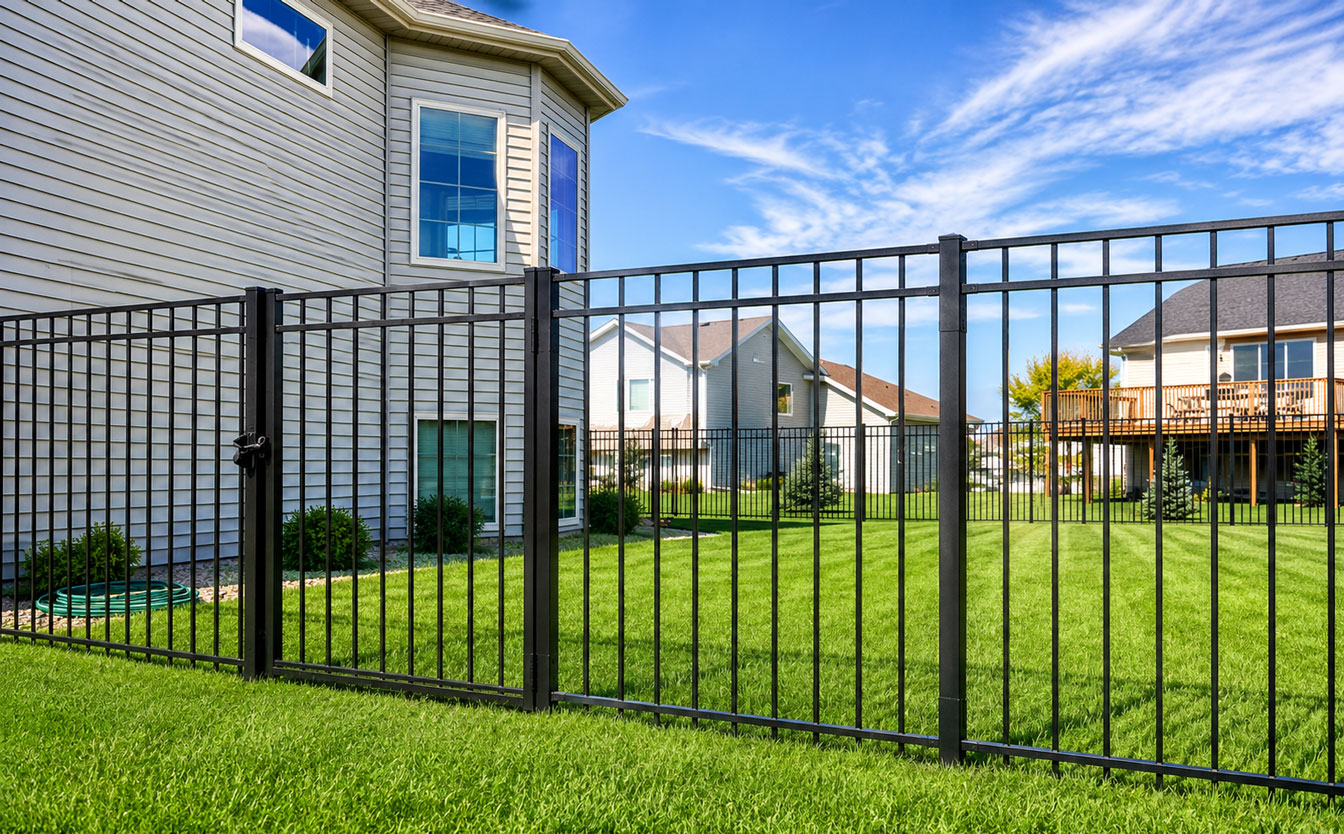
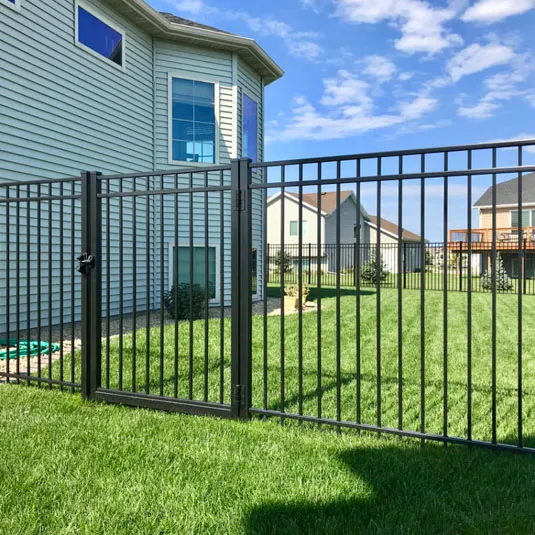
Aluminum fence panels are available in different widths and heights, and the correct combination depends on the fence type, installation layout and required function.
VTON's current aluminum fencing range includes listed width options such as 970 mm, 1475 mm, 2400 mm and 3000 mm, with height options including 900 mm, 1200 mm, 1500 mm and 1800 mm on selected products. These dimensions should not be interpreted as universal industry standards or as interchangeable width-height combinations. A 970 mm dimension, for example, may relate to a gate or specific product configuration rather than a standard fence panel. For B2B orders, the manufacturer should confirm the exact panel, gate and post dimensions against the selected model and project drawing before production.
Technical standards also matter when evaluating panel dimensions. ASTM F2957 for ornamental aluminum fence systems covers areas including physical dimensions, structural testing, materials and workmanship, illustrating why panel size cannot be considered independently from structural design.
Fence panel height should be selected according to the function of the boundary, required visibility and any applicable local safety or planning requirements. A lower fence may be suitable when the main goal is boundary definition and maintaining open views, while taller panels may be preferred where greater separation or security is required. Within VTON's available product ranges, common selectable heights include 900 mm, 1200 mm, 1500 mm and 1800 mm, but application requirements should always be checked before deciding.
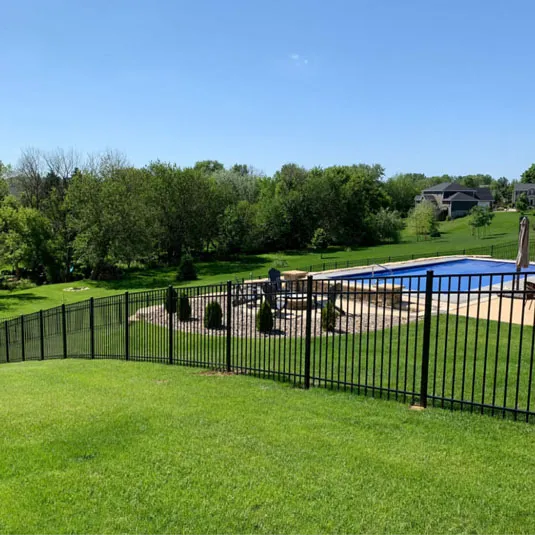
Pool fencing is a good example of why height cannot be chosen based on appearance alone. The U.S. Consumer Product Safety Commission's residential pool barrier guidance recommends that an outdoor pool barrier be at least 48 inches, approximately 1220 mm, high and also provides requirements for openings and ground clearance. Local codes may impose different or additional requirements.
For projects specifically involving swimming pools, buyers should therefore use a dedicated aluminium pool fence panel system rather than assuming that a general residential panel is suitable.
Fence panel width determines how many panels and posts are required across a boundary and affects installation, transportation and adaptability to site conditions.
Wider panels can reduce the number of fence bays on long, straight runs. Narrower panels, however, can be easier to accommodate around short boundaries, corners and irregular site layouts.
Consider a simple 30 m straight fence run.
Using nominal 2.4 m panels:
30 ÷ 2.4 = 12.5 panel bays
Using nominal 3.0 m panels:
30 ÷ 3.0 = 10 panel bays
A wider panel could therefore reduce the number of sections and intermediate posts. However, this does not automatically mean that the widest panel is the better option.
Longer panels may place different demands on rails, posts and connections. They can also be less convenient where a site contains frequent corners, gates or level changes.
A project should therefore balance installation efficiency against structural requirements and layout flexibility.
Effective installed width is the actual boundary distance occupied by a fence module after posts, brackets and connection gaps are included.
This is one of the most important dimensions for contractors calculating quantities.
A panel labelled 2400 mm wide does not necessarily mean that post centres should be exactly 2400 mm apart. Depending on the connection system, the finished module may occupy slightly more or less space.
Even a small error becomes significant across a long fence.
For example:
20 mm × 20 sections = 400 mm
A 20 mm misunderstanding repeated across 20 panels creates a 400 mm difference at the end of the run—enough to affect an end panel, gate position or post location.
For this reason, buyers should ask the supplier to confirm:
panel width, effective installed width and recommended post spacing
as three separate dimensions whenever the system design makes them different.
This is particularly important for a modular aluminum fence system, where repeatable module spacing directly affects the overall layout.
The best aluminum fence panel size depends on whether the priority is visibility, privacy, repeated installation, safety or adaptability to the site.
| Application | Main Sizing Priority | What Buyers Should Check |
| Residential boundary | Appearance and property layout | Height, panel width, gate positions |
| Garden fence | Visibility and flexibility | Short runs, corners and landscaping |
| Pool fence | Safety requirements | Height, openings, gates and clearance |
| Commercial perimeter | Repeatability and durability | Panel span, posts and long fence runs |
| Modular fencing | Consistent section dimensions | Effective width and connection system |
| Sloped site | Adaptability to level changes | Stepped, raked or custom panels |
The table highlights why the same panel should not automatically be used across every application.
A 3 m-wide panel may work efficiently on a straight commercial perimeter, while a smaller module may be easier to use around a landscaped residential property with several corners and gate openings. The correct size is therefore the one that reduces unnecessary custom sections while still satisfying the project's structural, functional and visual requirements.
Fence panel quantity is calculated by dividing the usable fence length by the effective installed width of the selected panel, then adjusting for gates, corners and custom sections.
For a 30 m boundary with a 1 m gate:
30 m − 1 m = 29 m of fence
If the effective panel width is 2.4 m:
29 ÷ 2.4 = 12.08
The project would initially require approximately 13 panel sections, before the final layout is adjusted for post positions, corners and end conditions.
This calculation is useful for preliminary budgeting, but a final order should be based on a drawing rather than total metres alone.
For projects with several gates or irregular boundaries, each straight fence run should normally be calculated separately. This reduces the risk of ordering too many standard panels while still needing several custom sections on site.
The right aluminum fence panel size depends on much more than the overall height and width shown in a product catalogue. Panel height should match the required function and applicable regulations, while panel width needs to balance installation efficiency, structural design and the complexity of the site. Buyers should also distinguish between nominal panel width, effective installed width and post spacing. On larger projects, even a small dimensional assumption can accumulate into a significant layout error.
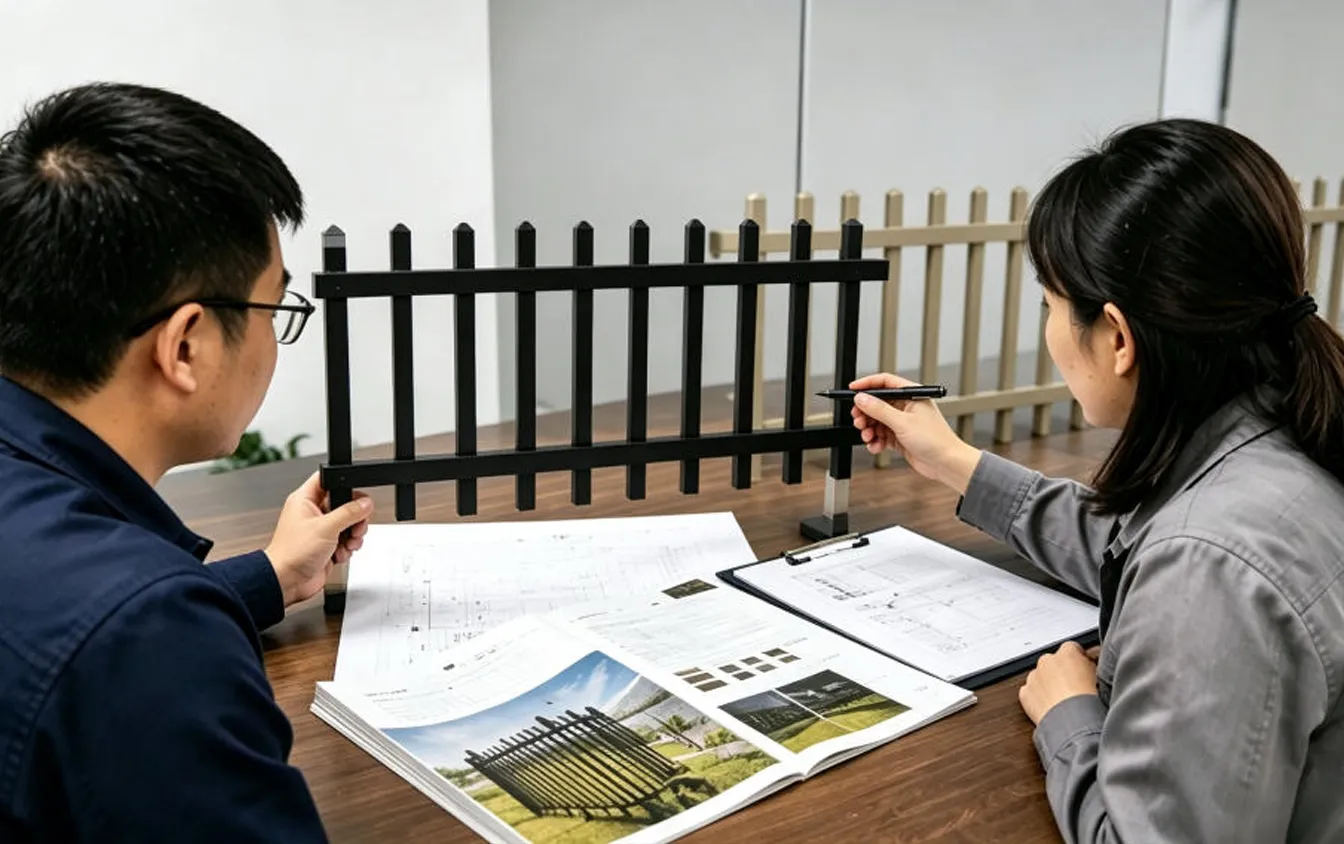
For contractors, distributors and developers, the most reliable approach is to provide VTON with the fence layout, dimensions, gates and installation conditions before production. This allows panel sizes and quantities to be evaluated as part of a complete aluminum fencing system.
There is no single universal standard size. Panel dimensions vary by manufacturer, application and market. VTON offers multiple widths and heights across different aluminum fencing products, with final dimensions confirmed according to the selected model.
Not always. Wider panels can reduce the number of posts on long straight runs, but smaller panels may be easier to fit around gates, corners, slopes and irregular boundaries.
The required height depends on the fence's purpose and local regulations. Residential boundary, privacy, commercial and pool fencing may all require different heights.
Yes. Project-based manufacturers can often adjust panel width, height or other dimensions according to drawings, quantity and manufacturing requirements.
Not necessarily. Posts, brackets and connection gaps can change the effective installed width. Buyers should confirm the recommended post spacing with the manufacturer before installation.
Subtract gate openings from the total fence length and divide the remaining distance by the effective installed panel width. Corners, end sections, slopes and custom panels should then be adjusted according to the final layout.