

What are you looking for?
A modular fence system is a fencing solution built from standardized panels, posts, gates and compatible connection components that can be combined into repeatable sections. Compared with fencing fabricated section by section on site, modular fencing shifts more dimensional control and component preparation into the manufacturing stage. This can simplify estimating, procurement, installation and future replacement, especially for residential developments, commercial projects and repeated fence layouts.
VTON supplies aluminum fencing for contractors, distributors and project buyers, including a dedicated modular aluminum fence system for configurable project applications.
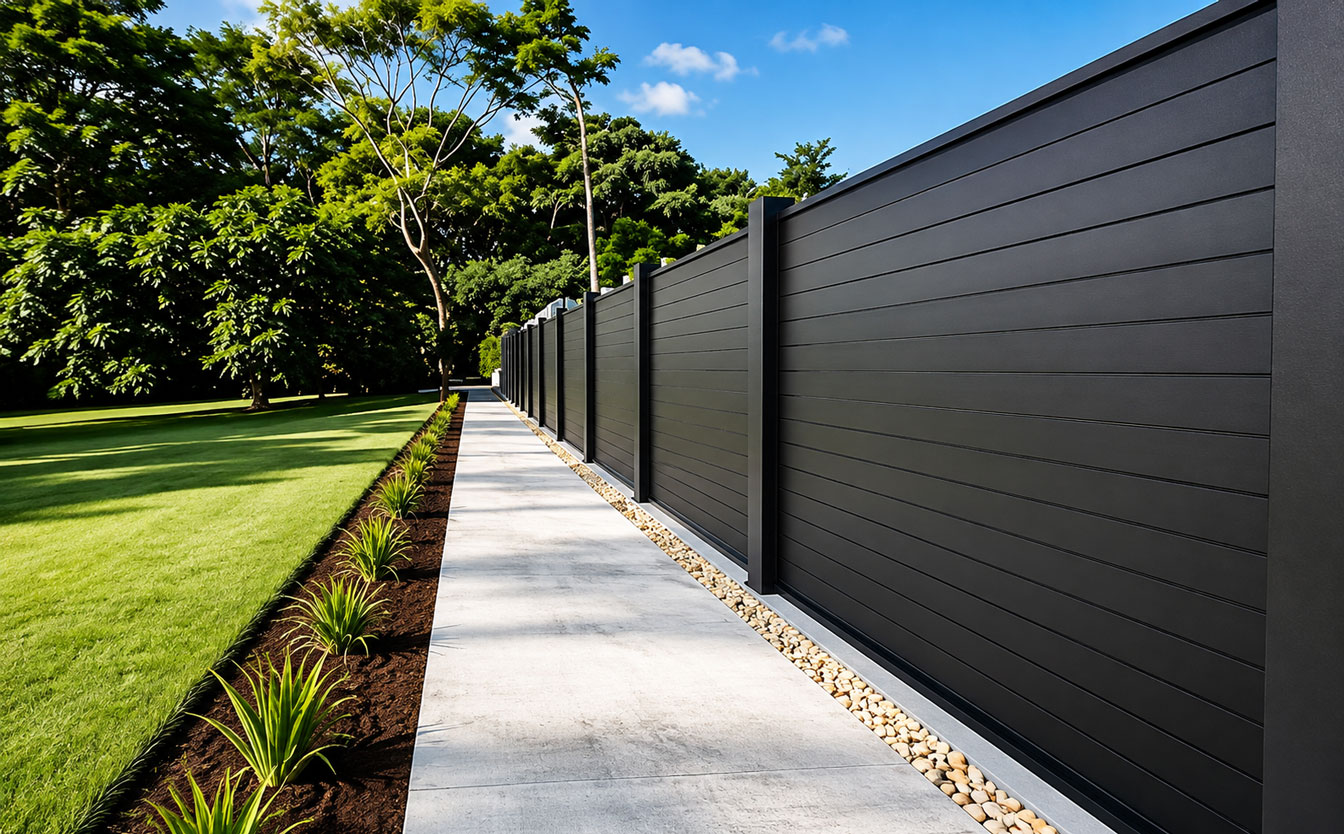
A modular fence system is a fence designed around repeatable components that work together according to defined dimensions and connection methods.
The key difference is the word system. A prefabricated panel alone is not necessarily modular. In a modular system, panels must coordinate with posts, gates and connection hardware so that sections can be repeated, replaced or adapted within the same layout.
For ornamental aluminum fencing, ASTM F2957-13(2025) for ornamental aluminum fence systems provides technical requirements covering materials, dimensions, workmanship, structural testing and surface finishes. Although the standard does not apply to every modular fence or market, it illustrates the importance of dimensional consistency and manufacturing control in aluminum fencing.
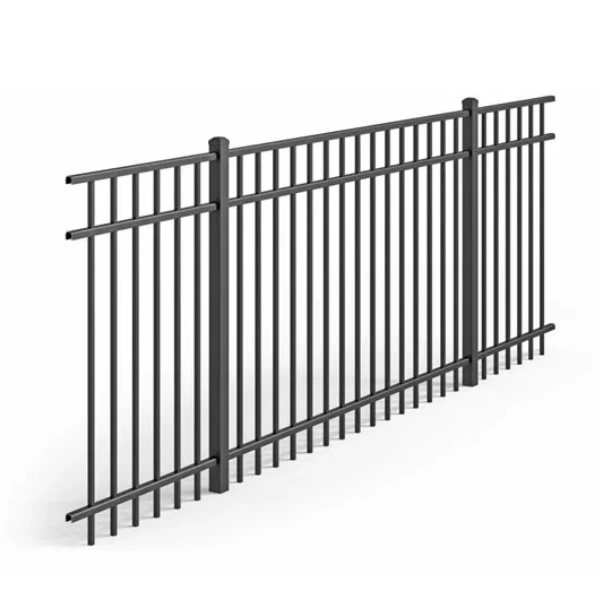
A modular fence is typically built from panels, posts, gates and connection components designed to function as one coordinated system.
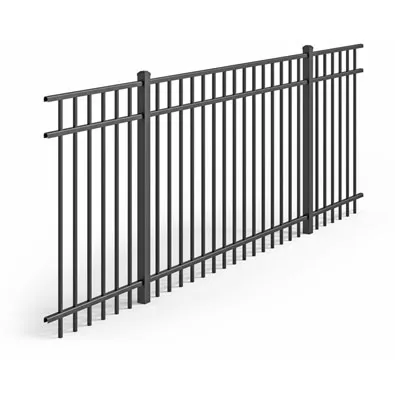
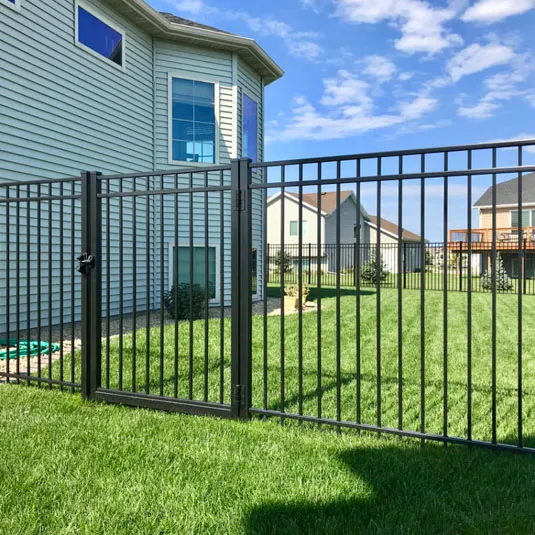
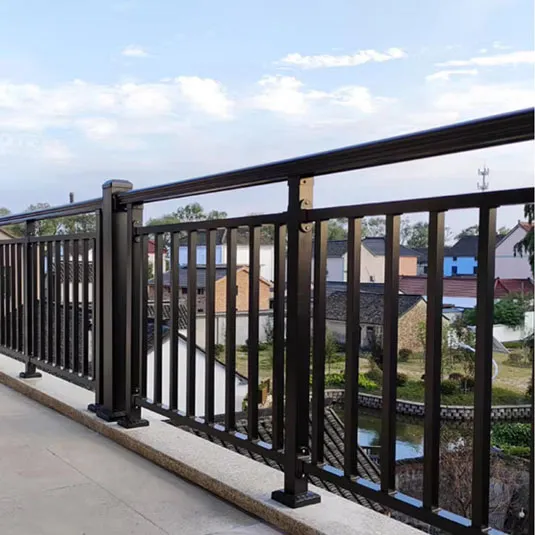
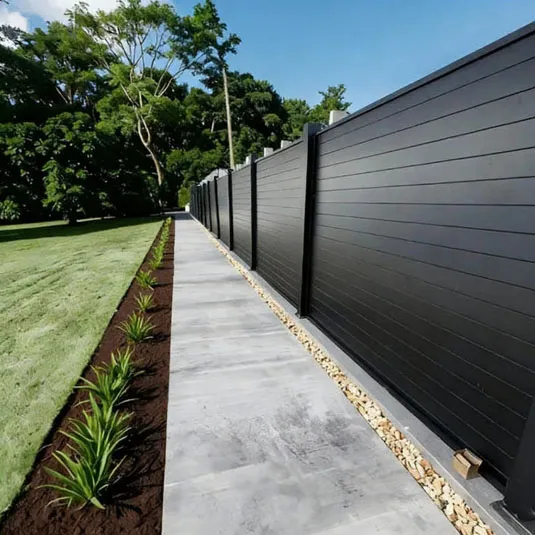
Fence panels form the main repeating sections. Depending on the design, they may use vertical tubes, pickets, rails, slats or other infill. VTON's modular aluminum fence currently lists widths including 970 mm, 1475 mm, 2400 mm and 3000 mm, with height options of 900 mm, 1200 mm, 1500 mm and 1800 mm. Tube-centre options include 87 mm, 91 mm and 100 mm. Exact configurations should be confirmed against the selected model and project drawing.
Posts support the panels and determine the effective spacing of each module. Gates should also be planned from the beginning because their width, support posts and clearances affect adjoining panel quantities.
Connection methods vary by system and may include brackets, bolts, screws or pre-punched fixing points. Buyers should therefore confirm whether a quotation includes only fence panels or a more complete set of posts, caps, brackets and gate components.
A modular fence system works by dividing a boundary into repeatable sections and adjusting those sections around gates, corners, slopes and end points.
For example, a 30 m fence line with one 1 m gate and nominal 2.4 m panels leaves:
30 m − 1 m = 29 m
29 ÷ 2.4 = approximately 12.1 panels
The preliminary estimate would therefore be around 13 panels, before allowing for posts, connection gaps, corners or custom sections.
This example shows why modular fencing can simplify early-stage quantity planning. However, final calculations should use the manufacturer's effective installed panel width, not the nominal panel width alone.
Installation normally starts with confirming the fence line, gate positions, corners and level changes. Posts are then positioned according to the required module spacing, followed by panels and gates. Modular does not automatically mean tool-free. Depending on the system, post setting, drilling, fastening or minor site adjustments may still be required. For a more detailed installation workflow, see VTON's aluminum fence installation guide.
A modular fence differs from traditional site-built fencing mainly in how much dimensional control and fabrication are completed before installation.
| Factor | Modular Fence System | Traditional Site-Built Fence |
| Panel dimensions | Standardized | Often adjusted on site |
| Factory preparation | Usually higher | Usually lower |
| Field fabrication | Generally reduced | Often more extensive |
| Repeated projects | Well suited | Requires more field adjustment |
| Replacement | Individual modules may be easier | May require cutting or welding |
| Irregular layouts | May need custom modules | More adaptable on site |
| Procurement | Component-based | Often material-based |
| Installation consistency | Easier to repeat | More installer-dependent |
The main advantage of modular fencing is therefore predictability and repeatability, not simply faster installation.
Traditional fencing may still be more suitable for projects with many unusual angles, curves or one-off site conditions.
Aluminum is well suited to modular fencing because it combines relatively low weight, corrosion resistance and the ability to be manufactured into consistent profiles. VTON's modular fencing uses 6063-T6 aluminum alloy, a material widely used in architectural extrusion applications.
Technical information published by The Aluminum Association on 6063 aluminum alloy lists a nominal density of approximately 2.7 g/cm³. Its relatively low density helps reduce panel weight and can make transportation and handling more manageable than with heavier metals.
Material grade alone, however, does not determine fence quality. Profile thickness, dimensional accuracy, fabrication quality and surface finishing are equally important.
Powder coating also plays a major role in outdoor performance. The Powder Coating Institute's guidance on powder coating performance explains that substrate cleanliness, pretreatment, coating chemistry and curing all influence adhesion and long-term coating quality.
For project buyers, it is therefore more useful to ask about the complete surface preparation and coating process than simply whether the fence is “powder coated.” Buyers can also explore VTON's broader aluminum fence systems for residential, pool and project applications.
Modular fence systems are most useful in projects where standardized sections can simplify planning, repeated installation and future maintenance.
Residential developments can repeat the same panel and gate configurations across multiple properties. Garden and yard fencing can maintain a consistent style while adapting to different boundary lengths.
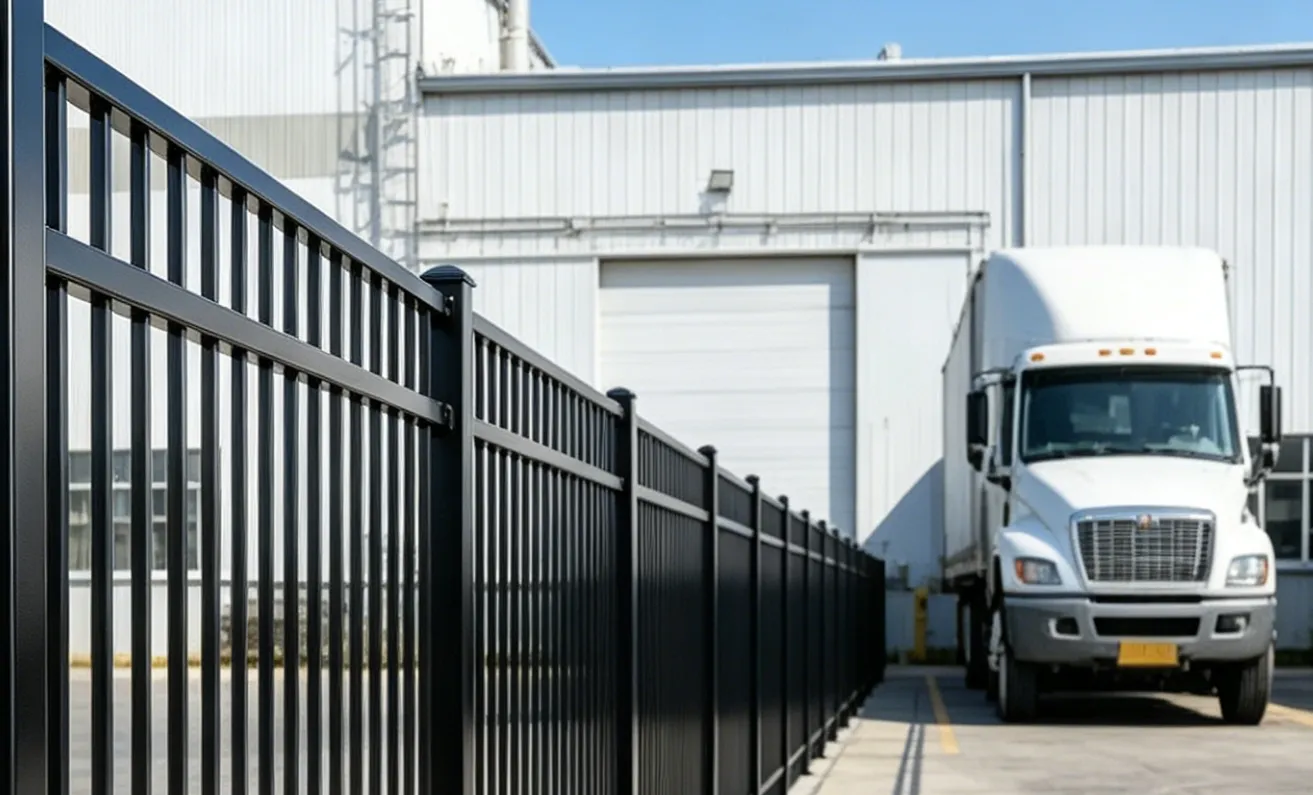
Commercial properties can benefit from standardized modules across longer fence runs, especially where replacement or future expansion may be required.
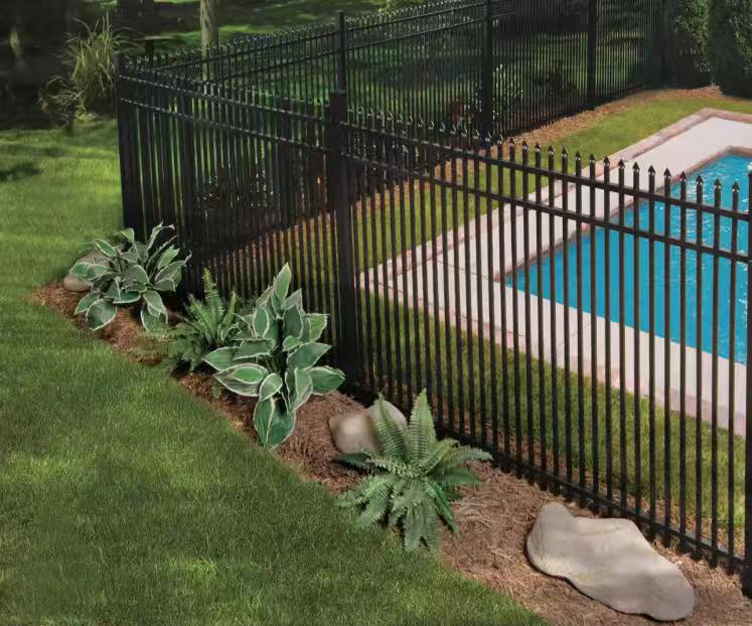
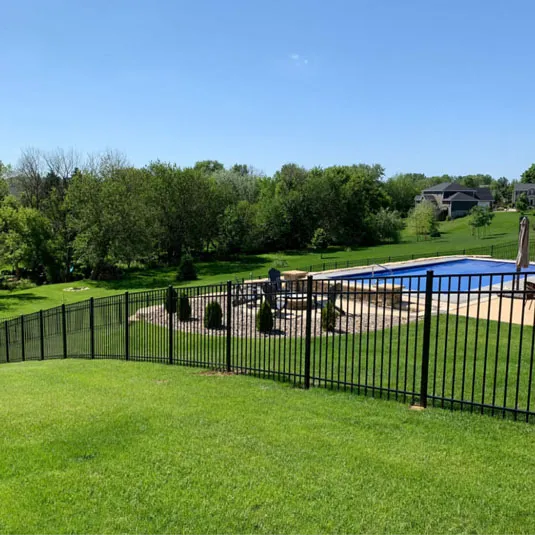
Modular principles can also be applied to pool fencing and controlled-access areas. In these applications, however, compliance depends on the complete installed barrier, including fence height, spacing, gates, latches and ground clearance—not on the panel alone.
A modular fence project should be planned by matching the actual site layout with confirmed panel, post and gate dimensions before production.
One important distinction is the difference between nominal panel width and effective installed width. The first describes the manufactured panel itself, while the second reflects the actual space occupied once posts, brackets and connection gaps are included.
For example, an error of only 20 mm per section becomes 400 mm across 20 modules. On larger projects, small assumptions can affect end panels, gate positions and total quantities.
For an accurate quotation, buyers should provide the total fence length, required height, gate locations, site slope, installation surface, colour and project drawing where available.
A useful RFQ might state:
Please quote approximately 500 m of modular aluminum fencing at 1200 mm height, including posts and gate requirements.
Please confirm panel width, effective installed width, connection hardware, powder-coated finish and any custom sections required from the attached drawing.
This allows VTON to evaluate the project as a complete fencing system rather than simply quote a price per panel.
A modular fence system is a coordinated fencing solution built around standardized panels, posts, gates and compatible connection components. Its main advantage is standardization. By defining more of the system before installation, modular fencing can simplify quantity planning, reduce unnecessary field fabrication and improve consistency across repeated projects. However, good results still depend on accurate measurements, correct post spacing and proper planning around gates, corners and slopes.
For contractors, developers and distributors, VTON can review drawings, required dimensions, fence length, gate positions and finish requirements before production to help determine a suitable modular aluminum fence configuration.
A modular fence is built from standardized or compatible sections that can be combined into different layouts. Panels, posts, gates and connection components are designed to work together as one system.
Not exactly. Prefabricated means components are produced before installation, while modular means those components are also designed as repeatable and compatible units.
It depends on the system. Some modular fences use factory-welded panels with mechanical connections on site, while others may require additional fabrication or adjustment.
Yes. Depending on the system, slopes may be handled using stepped sections, raked panels or custom modules.
In many systems, individual panels can be replaced without rebuilding the entire fence line. The actual process depends on the post and connection design.