What are you looking for?
AS1926.1 is one of the key Australian Standards used for the design, construction and performance of swimming pool safety barriers. For pool builders, contractors, importers and property owners, it provides an important technical framework for reducing the risk of young children gaining unsupervised access to a swimming pool.
The latest edition published by Standards Australia is AS 1926.1:2024, Swimming pool safety – Safety barriers for swimming pools. However, the edition legally applicable to a particular project can depend on the state or territory, the National Construction Code and local regulations, as well as when the pool and barrier were approved or constructed. For this reason, a pool fence should never be treated as compliant simply because a supplier describes the product as “AS1926.1 compliant.” Compliance depends on the complete installed barrier system, including fence dimensions, gates, latches, non-climbable zones, surrounding objects and the regulatory requirements that apply at the project location.
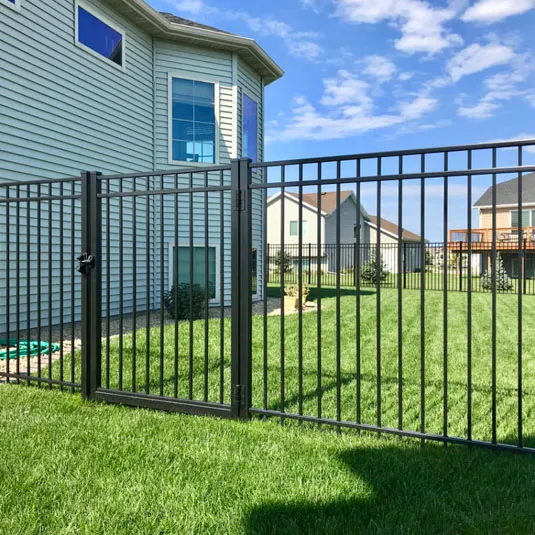
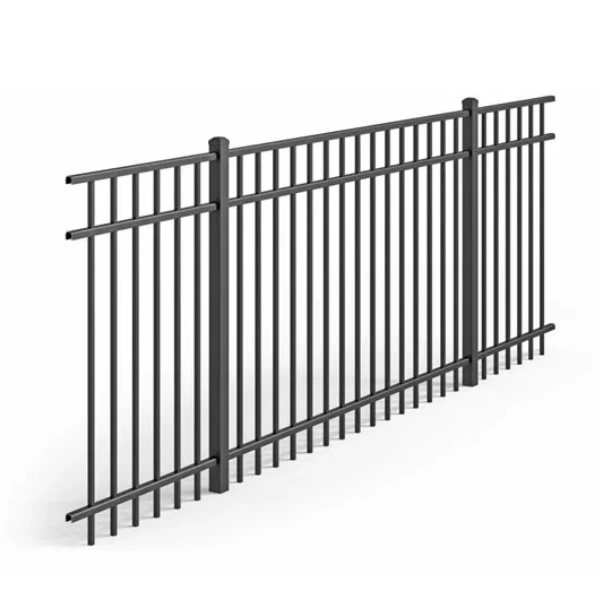
For buyers sourcing a physical barrier system, VTON's aluminum swimming pool fence can be configured with different panel, gate and finish options according to project drawings and procurement requirements.
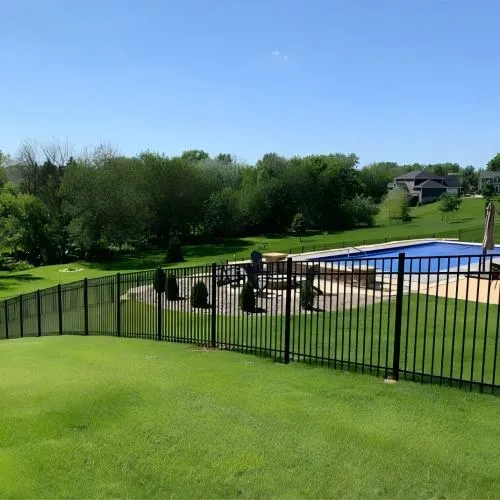
AS 1926.1 is an Australian Standard covering safety barriers intended to restrict young children's access to swimming pools.
It addresses the performance of the barrier as a complete safety system rather than focusing only on the fence material itself.
The standard deals with areas such as:
barrier configuration;
openings and clearances;
non-climbable zones;
gates and gate components;
structural performance;
latches and hinges;
potential climbing opportunities;
testing and performance of barrier components.
Standards Australia published the revised AS 1926.1:2024 edition in 2024. According to its official update, the revision introduced clearer definitions and diagrams, additional guidance relating to plants within non-climbable zones, updated requirements for gate latches and hinges, and increased testing cycles for gate components.
You can review the official summary from Standards Australia: AS 1926.1:2024.
Not necessarily.
This is an important distinction that is often missed in online pool fence guides.
AS 1926.1:2024 is the latest published edition of the Australian Standard, but publication of a new standard does not automatically mean every Australian jurisdiction immediately applies that edition to every existing and new pool.
Pool barrier requirements are implemented through a combination of state and territory legislation, building regulations, the National Construction Code and local compliance processes.
For example, the NCC 2022 referenced documents currently identify AS 1926.1:2012 as the referenced edition in that edition of the Code. You can check the NCC referenced documents for the applicable citation.
Individual jurisdictions can also have different transition arrangements.
Western Australia's current pool barrier guidance, for example, continues to reference AS 1926.1-2012 for many swimming pool and spa safety barriers. See the official Western Australia swimming pool and spa safety barrier requirements.
Before specifying or ordering a pool fence, confirm:
which edition of AS 1926.1 applies to the project, what state or territory legislation applies, whether the age of the pool affects the applicable requirements, and whether local authority approval or inspection is required.
For commercial sourcing, these requirements should be confirmed before final manufacturing drawings are approved.
This prevents a common procurement problem: purchasing a fence panel that appears suitable based on nominal dimensions but does not match the barrier configuration required at the actual installation site.
The 2024 revision was intended to improve clarity and bring the standard closer to current pool barrier practices.
Standards Australia identifies several notable changes.
Definitions and diagrams were revised to reduce ambiguity and make barrier requirements easier to understand and apply.
For project buyers, clearer dimensional drawings are particularly important because small differences in the interpretation of ground level, openings or climbable zones can affect the final fence layout.
The revised standard includes additional information relating to objects and plants within non-climbable zones.
This reinforces an important principle:
Pool barrier compliance depends on the environment around the fence, not only the fence panel itself.
A technically suitable panel may no longer provide an effective barrier if furniture, retaining walls, landscaping, planters or other climbable objects are positioned incorrectly around it.
The revision also updates requirements relating to gate latches and hinges.
Gate components are particularly important because a pool gate is a moving part of the barrier and must continue to perform correctly after repeated use.
Standards Australia also notes increased testing cycles and frequency for certain gate components.
For buyers, this is a reminder that gate hardware should not be treated as a minor accessory added after the fence panels have been selected.
Fence panel, gate frame, hinge, latch and gate-post requirements should be considered as one complete system.
Exact compliance should always be checked against the edition of the Standard and regulations applying to the project.
However, current Australian government pool safety guidance commonly includes several important barrier checks.
| Barrier Check | Common Australian Requirement |
|---|---|
| Internal pool barrier height | Generally at least 1200 mm |
| Gap beneath barrier | Generally no more than 100 mm |
| Openings between vertical members | Commonly limited to 100 mm where relevant conditions are met |
| Non-climbable zone | Commonly 900 mm |
| Pool gate | Self-closing and self-latching |
| Gate swing | Generally opens away from the pool area |
| Surrounding objects | Must not create climbing opportunities |
Queensland's official pool safety guidance, for example, identifies a minimum barrier height of 1200 mm, control of gaps and a continuous 900 mm non-climbable zone as key considerations. See the Queensland Government pool fences and barriers guidance.
These figures should be treated as useful design checks, not as a substitute for confirming the complete requirements for a specific project.
Boundary fences, mesh barriers, windows, retaining walls, changes in ground level and older pools may require different treatment.
Barrier height is one of the most visible pool fence requirements.
For many current Australian pool barrier configurations, the internal barrier is required to provide an effective height of at least 1200 mm when measured according to the applicable rules.
But simply ordering a 1200 mm-high panel does not automatically produce a 1200 mm-compliant installed barrier.
The effective height can be affected by:
raised garden beds;
paving;
steps;
retaining walls;
changing ground level;
mounting method;
objects positioned next to the fence.
This is why site drawings and finished ground levels should be confirmed before fence production.
For projects with significant changes in elevation, our guide to sloped backyard pool fencing in Australia explains why slope information should be resolved before installation begins.
Pool barriers must restrict a young child from passing through or beneath the barrier.
For many conventional vertical pool fence configurations, a 100 mm maximum opening is an important design benchmark.
This can apply to gaps between vertical components and the clearance beneath the fence, depending on the barrier design and applicable requirements.
For manufacturers and buyers, this means panel drawings should specify actual clear openings rather than relying only on nominal tube centres.
For example:
tube centre spacing and clear opening are not necessarily the same measurement.
The tube diameter, manufacturing tolerance, welding position and finished panel dimensions all affect the actual clear gap.
This is one reason project drawings are more useful than product photos when ordering fencing. Buyers can review our guide on why fence drawings matter when ordering custom fencing before approving a production order.
A pool fence must not provide an easy climbing route for a young child.
Australian pool safety rules therefore use the concept of a non-climbable zone, or NCZ.
A continuous 900 mm non-climbable zone is a common requirement in current Australian pool barrier guidance.
Potential climbing hazards can include:
outdoor furniture;
BBQs;
large planters;
raised garden beds;
trees and branches;
pool equipment;
taps and pipework;
retaining walls;
horizontal fence components;
decorative structures.
The critical point is that compliance can change after installation.
A barrier that passes inspection when the pool is completed may later become unsafe if a bench, planter or other climbable object is placed beside the fence.
For this reason, the surrounding pool landscape should be considered during both design and long-term maintenance.
The gate is one of the most important components of a pool safety barrier.
Australian pool safety requirements commonly require gates to:
open away from the pool area, close automatically and latch automatically.
The gate should be able to perform reliably throughout normal use rather than only when it is deliberately pushed closed.
The gate system should therefore be evaluated as a combination of:
gate frame + gate posts + hinges + latch + opening clearance + surrounding NCZ.
A lightweight gate installed on unstable posts can create alignment problems even when the latch itself is suitable.
Similarly, a correctly manufactured gate can become non-compliant if the hinge adjustment changes and the gate no longer closes or latches correctly.
When ordering a pool fence system, buyers should therefore provide the required gate width, gate height, hinge side, swing direction and hardware requirements before production.
Ground level is often overlooked during pool fence design.
A fence may have a nominal panel height of 1200 mm, yet the effective height can be reduced if the external ground level rises beside the panel.
This frequently happens around:
landscaped gardens, pool decking, retaining walls, steps and sloping backyards.
Before manufacturing or installing a pool fence, contractors should identify the finished ground level along the entire fence run.
On sloped sites, the installer may need to use:
stepped panels;
rackable sections;
custom panel heights;
adjusted post lengths;
site-specific barrier details.
If these conditions are discovered only after the material arrives on site, installers may need to modify panels or change post positions, increasing both installation time and compliance risk.
No.
AS1926.1 compliance is not determined simply by choosing aluminum, steel, glass or another material.
The completed barrier needs to satisfy the relevant dimensional, structural and operational requirements.
This means statements such as:“aluminum fences are automatically AS1926.1 compliant”or“galvanized steel fences are always compliant”are misleading.
The more useful question is: Can the selected material and fence system be manufactured and installed in a configuration that satisfies the project requirements?
Aluminum is widely used for pool fencing because it combines corrosion resistance, relatively low weight and flexible panel design.
Powder-coated aluminum is particularly useful for outdoor environments where buyers want a low-maintenance metal barrier.
For wholesalers, builders and contractors, VTON supplies aluminum swimming pool fence with configurable panel sizes, gate options and surface finishes for different project requirements.
The buyer should still confirm the final dimensions and applicable local compliance requirements before approving production.
Galvanized steel offers higher mass and rigidity and can be suitable where project specifications prioritize structural robustness.
However, material strength alone does not determine pool barrier compliance. Panel gaps, rails, gate components, corrosion protection and installation details still need to satisfy the applicable project requirements.
A correctly manufactured panel can still result in a non-compliant barrier when installed incorrectly.
Common installation-related risks include incorrect post spacing, excessive clearance beneath panels, uneven ground levels, gates that do not self-close correctly and climbable objects positioned too close to the barrier.
Before installation, verify:
site dimensions → approved drawings → panel dimensions → post positions → gate openings → finished ground level.
For a broader step-by-step installation process, see VTON's aluminum fence installation guide.
Installers should also complete a final inspection after panels and gates have been fitted rather than assuming the barrier is correct simply because the components matched the order.
Our article on common fence installation mistakes covers several layout and installation problems that should be checked before project handover.
For an importer, distributor or contractor, compliance planning should begin before placing the purchase order.
A useful procurement review should confirm the following:
| Procurement Item | What the Buyer Should Confirm |
|---|---|
| Applicable standard | Required AS 1926.1 edition and local regulations |
| Panel height | Required effective barrier height |
| Vertical openings | Maximum permitted clear opening |
| Bottom clearance | Required installed ground clearance |
| Rails | Position relative to non-climbable zones |
| Gate direction | Required swing direction |
| Gate hardware | Self-closing and self-latching requirements |
| Gate opening | Exact finished opening dimensions |
| Posts | Type, length and installation method |
| Ground conditions | Flat, sloped, stepped or retaining-wall sections |
| Finish | Powder coating / corrosion protection |
| Drawings | Approved dimensional drawings before production |
| Documentation | Required product, test or inspection documents |
This information gives the manufacturer a much better basis for preparing an accurate quotation and production drawing.
It also reduces the risk of receiving technically well-made fencing that does not fit the actual site layout.
For commercial or imported pool fencing, buyers should not rely only on a product photo and a statement that the product is “compliant.”
Depending on the project, request relevant documentation such as:
dimensional drawings;
material specifications;
gate and hardware specifications;
coating information;
production tolerances;
available test documentation;
packing list;
installation details;
sample or pre-production approval where appropriate.
If a particular certification or test report is required by the project, confirm that the supplier can provide the actual document before placing the order.
Do not assume that a generic product family certificate automatically applies to every custom dimension or hardware configuration.
Privacy requirements and pool safety requirements are not always the same.
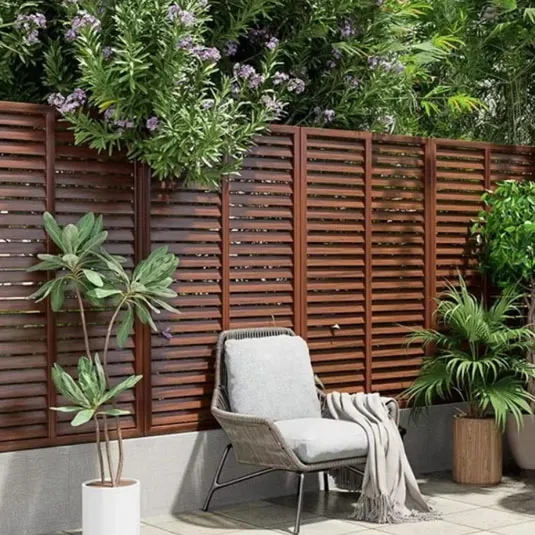
A taller or more solid fence may provide better privacy, but changes to horizontal members, decorative components or landscaping can affect climbability.
The barrier must therefore be designed as both an architectural feature and a safety system.
For projects where privacy is also important, see our guide to swimming pool privacy fence design.
The design should always be checked against the applicable pool barrier rules before the privacy layout is finalized.
AS 1926.1:2024 is the latest published edition, but the legally applicable edition can vary between jurisdictions and projects.
Always verify the applicable requirements before design and ordering.
A 1200 mm nominal panel does not automatically mean the installed barrier provides an effective 1200 mm barrier height.
Ground level and surrounding structures matter.
The gate is a critical part of the barrier.
Its posts, opening, hinges, latch and swing direction should be included in the original project drawing.
Nominal spacing does not always equal the clear opening between fence components.
Use actual manufacturing dimensions.
Compliance applies to the complete installed barrier and its surroundings.
A fence component alone cannot guarantee compliance for every site.
Plants, furniture and other outdoor elements can compromise non-climbable zones after installation.
Pool barrier maintenance should therefore continue after the project is completed.
For Australian importers, distributors and contractors, the safest sourcing process begins with the project requirements rather than a catalogue product.
Before requesting a quotation, provide the supplier with: total fence length, required barrier height, panel dimensions, gate openings, site drawings, slope information, surface finish, project location and the applicable compliance requirements.
VTON manufactures aluminum fencing for residential and project applications and can work from buyer drawings to prepare panel, post and gate configurations. You can review the wider VTON aluminum fence range or the dedicated aluminum swimming pool fence before submitting your project dimensions. For Australian pool projects, the final system should always be checked against the regulations and standard edition applicable at the installation location before production and installation are finalized.
AS1926.1 is not simply a checklist for choosing a fence panel. It is part of a broader pool barrier safety framework covering barrier dimensions, non-climbable zones, gates, components, structural performance and the surrounding installation environment. The release of AS 1926.1:2024 makes it particularly important for builders, pool fence suppliers and project buyers to distinguish between the latest published Standard and the edition currently adopted for a particular project or jurisdiction. For procurement, the best approach is therefore to confirm the applicable requirements first, translate those requirements into clear fence drawings and gate specifications, and only then approve manufacturing. That process reduces installation problems, helps buyers request the right documentation and gives the finished pool barrier a much stronger basis for meeting Australian safety requirements.
AS 1926.1 is an Australian Standard covering safety barriers designed to restrict young children's access to swimming pools. It addresses barrier design, construction, components and performance.
Standards Australia published AS 1926.1:2024 in 2024. The revision includes clearer definitions and diagrams, additional guidance concerning non-climbable zones and updates relating to gate components.
Not automatically. The edition applicable to a project depends on the relevant state or territory rules, building regulations, NCC provisions, project approval history and transition arrangements. Always confirm the requirements for the project location.
A minimum effective height of 1200 mm is widely used for internal pool barriers under current Australian pool safety requirements. However, boundary barriers and particular site conditions can have different requirements, so the applicable local rules should be checked.
A maximum gap of 100 mm beneath a pool barrier is a common requirement in Australian pool safety guidance. Site conditions and the applicable standard should still be verified.
A non-climbable zone is an area around the pool barrier that must remain free from features or objects that could help a young child climb the barrier. A 900 mm NCZ is commonly used in Australian pool barrier requirements.
Australian pool safety requirements generally require pool gates to close and latch automatically. Gate operation should be checked after installation and maintained throughout the life of the barrier.
Yes, an aluminum fence system can be designed for projects governed by AS1926.1 requirements, provided the finished barrier configuration meets the applicable dimensions, gate, structural, non-climbable-zone and installation requirements. The material itself does not guarantee compliance.
No. Compliance depends on the complete installed barrier, including panel dimensions, posts, gaps, gates, hardware, ground level, surrounding climbable objects and local regulatory requirements.