What are you looking for?
6063-T6 aluminum is a heat-treated aluminum alloy widely used for extruded architectural profiles where consistent dimensions, good surface quality and moderate structural strength are required. For fence buyers, however, seeing “6063-T6” on a specification sheet does not automatically guarantee a high-quality fence. Alloy temper, profile thickness, fabrication, welding, surface preparation and coating all affect the finished product.
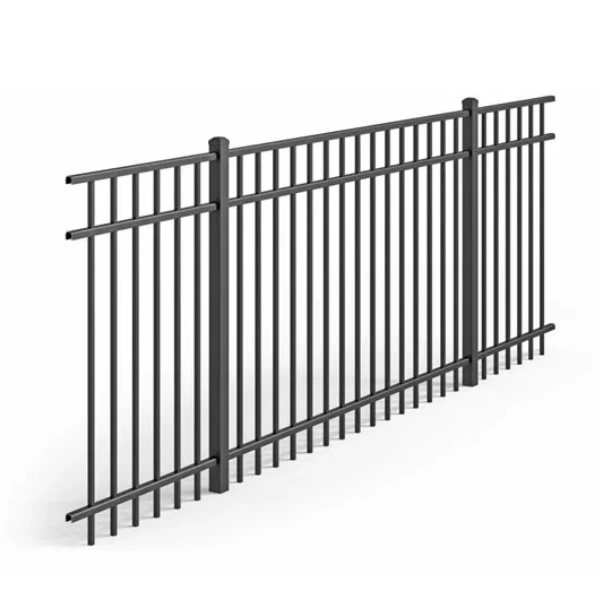
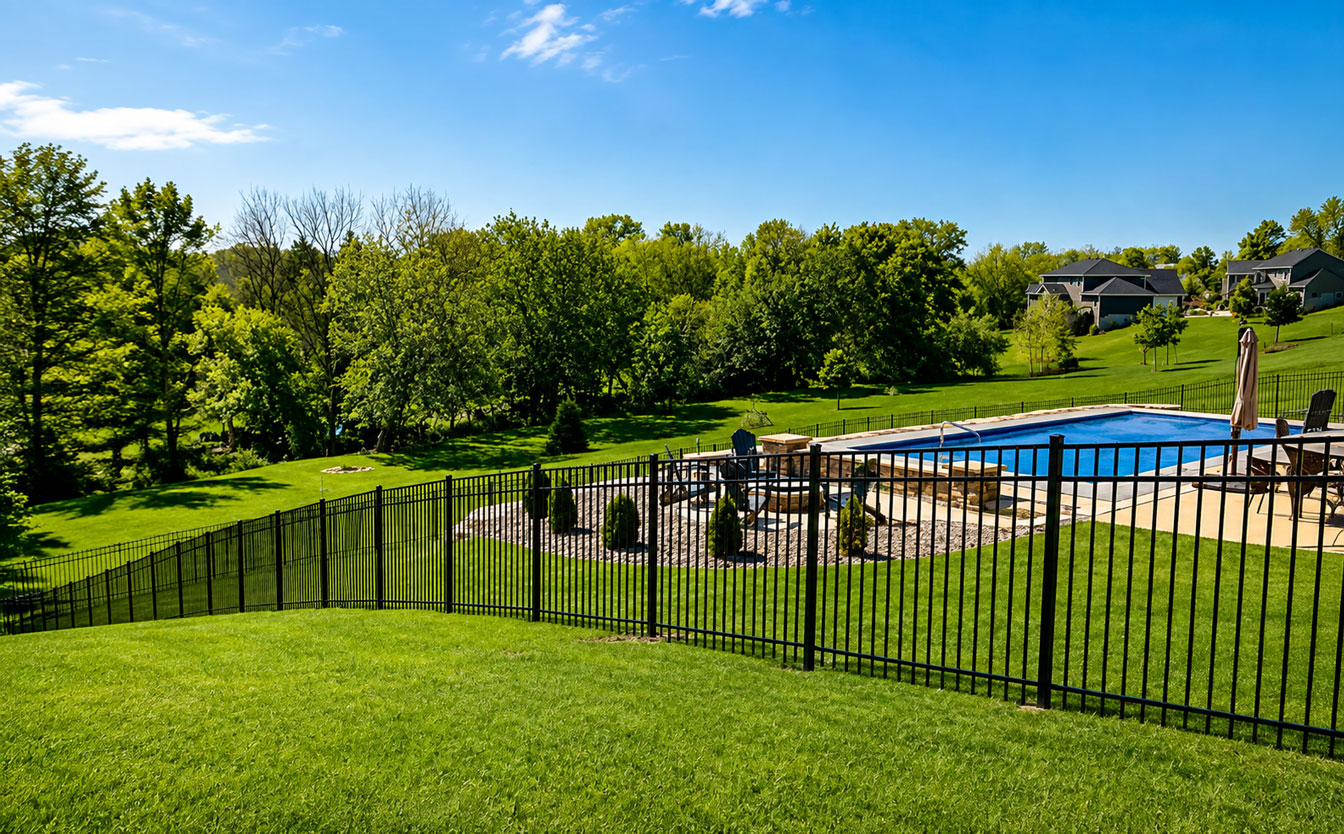
VTON uses 6063-T6 aluminum in selected fencing products, including its modular aluminum fence system and aluminium pool fencing.
6063-T6 is a magnesium-silicon aluminum alloy that has been solution heat-treated and artificially aged to achieve higher strength than softer 6063 tempers.
6063 belongs to the 6000-series aluminum family and is especially suitable for extrusion. Hydro's technical data for alloy 6063 lists a silicon content of approximately 0.20–0.60% and magnesium of 0.45–0.90%, with aluminum making up the balance. Its ability to form consistent extruded profiles is particularly useful for fencing, where rails, tubes, posts and other components need repeatable cross-sections and clean visible surfaces.
The ASTM B221 specification for aluminum extrusions covers extruded bars, rods, profiles and tubes and includes requirements related to alloy composition and mechanical properties. For buyers sourcing extruded fencing components, this is a more meaningful technical reference than relying on a supplier's general statement that the material is simply “high-grade aluminum.”
The T6 designation means the aluminum has been solution heat-treated and then artificially aged to develop higher mechanical strength.
This is different from the alloy number itself. 6063 identifies the alloy chemistry, while T6 identifies the thermal treatment applied after forming. Hydro distinguishes T6 from T5: T5 material is cooled from an elevated-temperature shaping process and artificially aged, whereas T6 undergoes solution heat treatment followed by artificial aging. For fence buyers, that difference matters because two products described as “6063 aluminum” can have different mechanical properties if their tempers are different.
6063-T6 provides moderate structural strength suitable for many architectural and fencing profiles, but its performance should always be considered together with profile geometry and wall thickness.
For 6063-T6 extruded tube, data published by The Aluminum Association's mechanical property limits lists minimum tensile strength of approximately 30 ksi (207 MPa) and minimum yield strength of 25 ksi (172 MPa) for the listed wall-thickness ranges. Minimum elongation is typically 8–10%, depending on thickness.
The alloy also has a nominal density of approximately 2.70 g/cm³.
These values help explain why 6063-T6 works well for fence profiles: it provides useful strength without the weight associated with many steel systems. However, a thicker well-designed rail made from 6063-T6 can perform very differently from a thin profile made from exactly the same alloy. Material designation should therefore never replace structural specification.
The difference between common aluminum grades and tempers is mainly a balance of strength, extrusion quality, surface finish and manufacturing requirements.
| Material | Minimum Tensile Strength* | Minimum Yield Strength* | Typical Buyer Consideration |
| 6063-T5 | 21–22 ksi | 15–16 ksi | Lower strength, common extruded architectural use |
| 6063-T6 | 30 ksi | 25 ksi | Good balance for visible architectural and fence profiles |
| 6061-T6 | 38 ksi | 35 ksi | Higher strength where greater structural performance is required |
*Values shown are Aluminum Association limits for applicable extruded tube thickness ranges; actual requirements vary by product geometry and specification.
6061-T6 is stronger on paper, but that does not automatically make it a better fencing material. For many architectural fence panels, 6063 offers advantages in extrusion quality, surface appearance and profile design. Hydro specifically identifies 6063 as a popular alloy for architectural shapes and profiles where good surface finish is important. The correct material should therefore be selected according to the complete fence design rather than by comparing tensile strength alone.
6063-T6 has good general corrosion resistance, but corrosion performance still depends on the installation environment, surface treatment and contact with other metals. Hydro describes heat-treated 6063 as having good resistance to general corrosion while also warning that direct contact with dissimilar metals can cause galvanic corrosion. This is particularly relevant for outdoor fencing exposed to moisture.
Fasteners, brackets, posts and panels need to be considered as a complete system. In demanding environments, suitable material combinations, isolation methods and protective coatings may be required. It is also worth avoiding the casual claim that 6063-T6 is automatically “marine-grade aluminum.” The term marine grade is not a standardized synonym for 6063-T6, and buyers should instead ask for the exact alloy, temper, coating specification and intended exposure environment.
Welding can locally reduce the strength of 6063-T6 because heat changes the T6 temper in the heat-affected zone around the weld. This point is often missing from commercial fence descriptions. Hydro specifically notes that the strength of 6063 in the T6 condition can be reduced in the welded region. That does not mean welded aluminum fencing is unsuitable. It means buyers should evaluate the complete fabricated panel, rather than assuming every welded area retains the original published T6 strength. For a factory-welded fence, important factors include joint design, weld consistency, profile dimensions and whether the finished panel has been engineered for its intended loads. This is particularly relevant when comparing a welded panel with an assembled or 6063-T6 modular aluminum fence, because the two systems may transfer loads differently.
Surface treatment is the finishing process applied to aluminum after fabrication to improve appearance and provide additional protection for outdoor exposure.
6063 naturally performs well as an architectural extrusion, but an outdoor fence still depends heavily on pretreatment and coating quality.
Powder coating is commonly used because it provides architectural colour while adding a protective finish. Yet the alloy underneath does not compensate for poor pretreatment, incorrect curing or inadequate coating coverage.
For buyers comparing aluminum fence suppliers, the more useful questions are not simply:
“Is it 6063-T6?”
“Is it powder coated?”
Instead, the specification should consider the alloy, temper, profile thickness, fabrication method and surface-finishing process together.
VTON's broader aluminum fence systems use different configurations according to the fence application, which is why final material and profile specifications should be confirmed by model rather than assumed across an entire product range.
A 6063-T6 fence specification should identify the actual alloy and temper together with the profile dimensions, fabrication method and finishing requirements.
For B2B orders, the following information is more useful than alloy grade alone:
| Specification | Why It Matters |
| Alloy & temper | Confirms whether the material is actually 6063-T6 |
| Profile dimensions | Determines section geometry and structural performance |
| Wall thickness | Affects stiffness, weight and material cost |
| Welding or assembly method | Influences joint behaviour and installation |
| Surface pretreatment | Affects coating adhesion |
| Powder specification | Influences appearance and outdoor durability |
| Panel & post dimensions | Determines complete system performance |
| Material documentation | Helps verify supplied material against the order |
For larger projects, buyers can also request material certificates or production documentation where required by the contract.
A useful RFQ might therefore say: Please quote 6063-T6 powder-coated aluminum fence panels and confirm rail, tube and post wall thicknesses, panel dimensions, fabrication method, coating specification and available material documentation. This gives VTON enough information to review the complete fence specification instead of quoting only by panel dimensions.
6063-T6 aluminum is widely used for fencing because it offers a practical combination of extrudability, surface quality, corrosion resistance, moderate structural strength and relatively low weight. For applicable extruded tube products, published Aluminum Association data lists minimum tensile and yield strengths of approximately 207 MPa and 172 MPa, respectively. However, those figures should not be treated as a guarantee of complete fence performance. A good fence depends on more than the alloy designation. Profile thickness, panel geometry, welding or assembly, posts, surface preparation and coating all influence the final product.
For contractors, distributors and project buyers, VTON recommends evaluating 6063-T6 as part of the complete fencing specification rather than using the material grade as the only quality indicator.
Yes. 6063-T6 combines moderate structural strength, corrosion resistance, good extrusion characteristics and a high-quality visible surface, making it suitable for many architectural fence profiles.
T6 means the alloy has been solution heat-treated and artificially aged to increase its mechanical strength.
Yes. For applicable extruded tube products, Aluminum Association data lists 6063-T6 at a minimum tensile strength of about 30 ksi compared with approximately 21–22 ksi for 6063-T5.
Not necessarily. 6061-T6 generally offers higher mechanical strength, while 6063 is particularly well suited to architectural extrusion and visible surface applications. The better choice depends on the fence design.
Welding can reduce strength locally in the heat-affected zone because the welding heat alters the T6 temper. The finished welded panel should therefore be evaluated as a complete structure.
No outdoor fence should be described as completely maintenance-free. Powder-coated 6063-T6 fencing is generally low maintenance, but periodic cleaning and inspection are still appropriate, especially in harsh or coastal environments.